Fall Peel Series for Hyperpigmentation and Melasma

If your skin came out of summer looking a little tired, you are not imagining it.
New Fall Peel Series Announcement
Introducing our exciting new Fall Peel Series! As the seasons change, so should your skincare routine. Our latest series features a range of specialized peels designed to rejuvenate your skin, enhance your glow, and prepare you for the colder months ahead.
What to Expect
Customized Treatments: Each peel is tailored to address specific skin concerns, from dryness to uneven texture.
Natural Ingredients: Our formulations incorporate seasonal ingredients that nourish and revitalize your skin.
Expert Guidance: Our trained professionals will help you choose the right peel for your skin type and goals.
Package Details
This series includes a chemical peel prep facial along with 3 chemical peels for just $595 instead of the regular price of $665.
Benefits of the Fall Peel Series
Improves skin texture and tone
Enhances hydration and radiance
Reduces the appearance of fine lines and blemishes
Embrace the new season with fresh, glowing skin. Book your appointment for the Fall Peel Series today and discover the transformative effects of our latest treatments!
Months of UV exposure, heat, sweat, skipped sunscreen reapplications, travel, pool days, and everyday life can leave behind a very specific kind of skin damage. Dark spots look darker. Texture feels rougher. Your glow seems buried under dullness. And if you deal with melasma, summer can make it flare fast.
The good news: fall is officially peel season.
Estheticians say it that way for a reason. Chemical peels are one of the most useful treatments for sun damage, uneven tone, rough texture, hyperpigmentation, and melasma-prone skin. But timing matters. Fall and winter give the skin a better environment for corrective work because UV exposure is usually lower, days are shorter, and most people naturally spend more time indoors.
Summer is when a lot of the damage shows up. Fall is when we start repairing it.

Why fall is the best season for corrective chemical peels
Chemical peels work by loosening and removing damaged outer layers of skin. Depending on the peel, they can help with dullness, clogged pores, uneven texture, fine lines, post-breakout marks, sun spots, and patchy pigment.
That fresh skin needs protection.
Freshly treated skin is more sensitive to sunlight. Too much UV exposure too soon after a peel can increase irritation and may make pigment worse, especially for anyone prone to hyperpigmentation or melasma. That is why deeper corrective work is usually better suited to fall and winter than the middle of July.
Fall gives your skin a few advantages:
Less intense sun exposure
UV rays are still present, but most people are not spending long days at the beach or pool.
More indoor time
Less heat and sweating can make post-peel healing easier to manage.
Better timing for events
Starting in fall can mean smoother, brighter skin by the holidays, with continued improvement into winter and spring.
More consistent routines
After summer travel and schedule changes, fall often makes it easier to stick with home care.
This is especially helpful for hyperpigmentation and melasma because both are triggered and worsened by UV exposure. Heat can also aggravate melasma for some people, which is another reason cooler seasons can be a better time to focus on corrective treatments.
A peel can brighten the surface, but pigment correction takes consistency, protection, and time.
One peel gives a glow, but a series creates real change
A single peel can absolutely make the skin look fresher. Many people notice a smoother feel, a brighter finish, and a cleaner look once the skin finishes shedding. That is why peels are popular before events, photos, or the holidays.
But one peel is not usually enough for deeper concerns.
Hyperpigmentation does not form overnight. Sun spots, post-inflammatory marks, and melasma can sit in different layers of the skin. Some pigment is closer to the surface. Some is more stubborn. Some pigment keeps getting reactivated by hormones, UV exposure, heat, or inflammation.
That is why a series of peels tends to work better than one appointment when the goal is correction.
A typical series may involve several peels spaced a few weeks apart, depending on the skin, the peel type, and the treatment plan. Each session builds on the progress from the last:
The first peel lifts surface dullness and helps wake up sluggish skin.
The next peel continues targeting uneven pigment and texture.
Later peels refine tone, smooth the surface, and support a brighter overall look.
This is not instant gratification skincare. It is a staged process. The skin needs time to renew, recover, and respond.

If you are looking up chemcial peels, hyperpigmentation, facials, the most important thing to know is this: a relaxing facial and a corrective peel series are not the same plan. Both can be useful, but they serve different goals.
A facial can hydrate, calm, cleanse, and refresh the skin. A peel series is more targeted. It is designed to create controlled exfoliation so the skin can gradually look smoother, brighter, and more even.
Hyperpigmentation and melasma are not the same thing
People often use the words dark spots, hyperpigmentation, and melasma like they all mean the same thing. They are related, but they are not exactly the same.
Hyperpigmentation is an umbrella term. It means the skin has produced extra pigment in certain areas. Common types include sun spots, post-acne marks, and discoloration after irritation or inflammation.
Melasma is a specific pigment condition. It often appears as larger brown or gray-brown patches, commonly on the cheeks, forehead, upper lip, or jawline. It is influenced by sun exposure, heat, hormones, pregnancy, certain medications, and genetics.
That difference matters because melasma is stubborn. It can improve, sometimes dramatically, but it is not something to treat once and forget forever. No peel, laser, facial, or cream can honestly promise that melasma will never come back.
The goal with melasma is control.
A smart plan can help fade visible patches, even the look of the skin, reduce triggers when possible, and maintain the results with sunscreen and pigment-safe home care. But ongoing maintenance is part of the deal.
For melasma-prone skin, aggressive treatment is not always better. Too much inflammation can backfire and trigger more pigment. The best approach is usually steady, careful, and customized.
What a good fall peel plan usually includes
A strong peel season plan is not just the peel itself. The results come from the full picture: prep, treatment, recovery, and maintenance.
Skin prep before the first peel
Your provider may recommend adjusting your routine before your first appointment. This can include pausing certain active ingredients, adding pigment-supporting products, or strengthening the skin barrier.
Common prep goals include:
Reducing irritation before treatment
Helping the skin tolerate exfoliation
Supporting a more even peel
Lowering the risk of post-treatment pigment
This is one reason a consultation matters. Skin that is dry, inflamed, over-exfoliated, or sensitized may need barrier repair before a corrective peel.
The peel itself
During the treatment, the skin is cleansed and prepared. The peel solution is applied for a controlled amount of time. You may feel warmth, tingling, tightness, or mild stinging, depending on the peel.
Not every peel makes the skin visibly shed in sheets. Some peels create light flaking. Others create more obvious peeling. Some produce more of a glow than dramatic peeling.
Visible peeling does not always equal a better result. The right peel is the one that suits your skin type, pigment pattern, tolerance, lifestyle, and goals.
The recovery window
After a peel, the skin may look pink, tight, shiny, dry, or flaky. This can vary a lot. Deeper peels usually require more downtime. Lighter peels may have little visible shedding.
The biggest rule is simple: do not pick.
Pulling flakes before they are ready can cause irritation, scabbing, and extra pigment. Let the skin shed on its own.
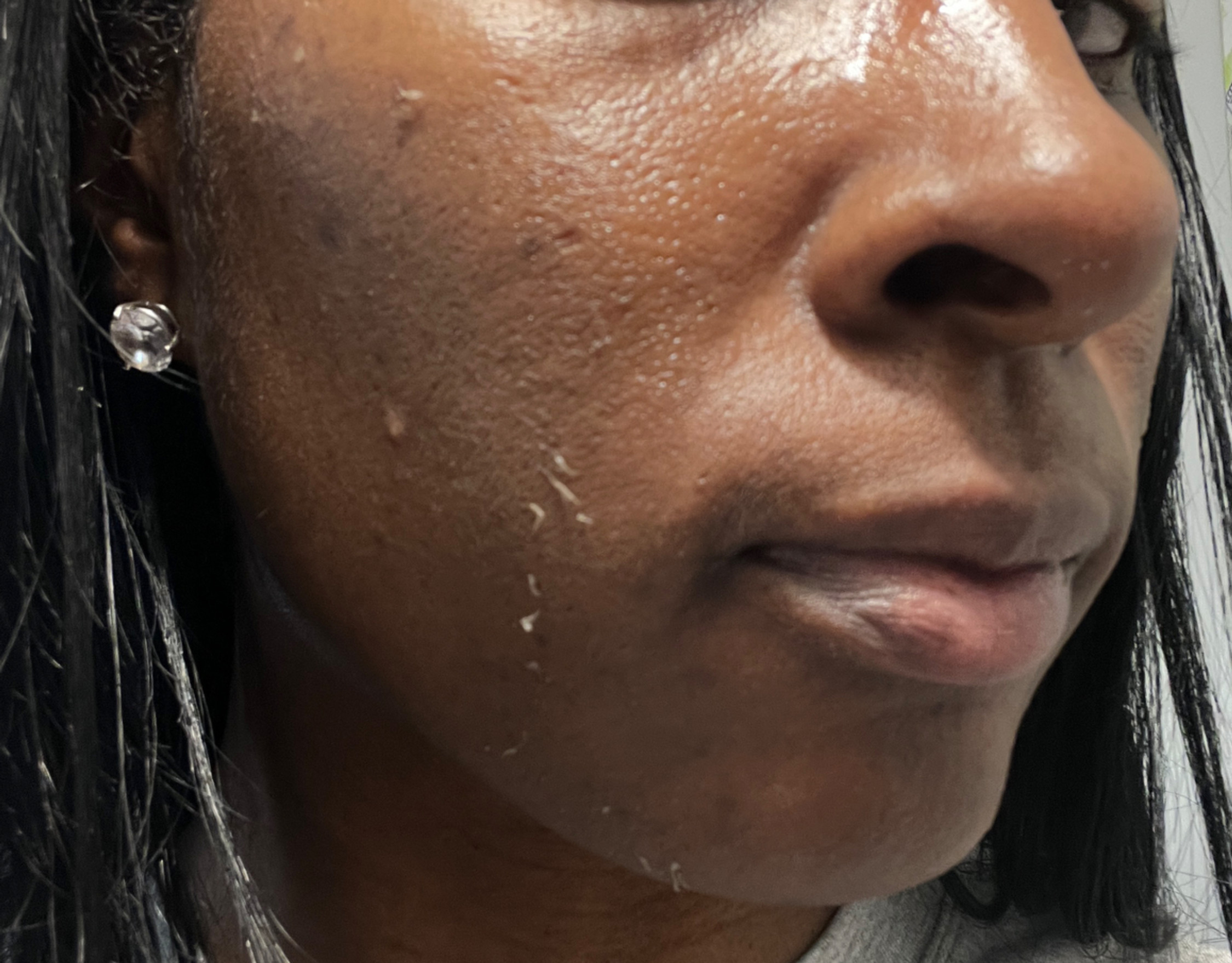
Flakes can last between5-14 days depending on thr chemcial peel
Aftercare makes or breaks your peel results
The peel does part of the work. Aftercare protects that work.
For the first several days after a peel, the routine usually needs to stay simple. Your provider’s instructions should come first, especially because different peels have different rules. In general, post-peel care focuses on calming, hydrating, and protecting the skin.
Most post-peel routines include:
A gentle cleanser
A bland moisturizer
Broad-spectrum sunscreen
No scrubs or harsh exfoliants
No picking or peeling the skin manually
Limited heat exposure, including saunas and hot yoga
A pause on strong actives until the skin is ready
Sunscreen is non-negotiable. This is true even in fall. UV rays still reach the skin on cloudy days and through windows. If pigment is the concern, sunscreen is not just an aftercare step. It is part of the treatment.
For many people with hyperpigmentation or melasma, a tinted mineral sunscreen can be helpful because iron oxides may offer added protection against visible light, which can contribute to pigment in some skin tones.
The best peel series will struggle if the skin gets repeated unprotected sun exposure between appointments. Peels and sunscreen work as a pair.
What kind of results can you expect?
Realistic expectations keep the process healthy and less frustrating.
After one peel, many people notice:
Brighter-looking skin
A smoother feel
Less surface dullness
A fresher glow
A more even makeup application
After a series, the changes can become more visible:
Dark spots may look lighter
Tone can appear more even
Texture may feel smoother
Congestion may improve
Melasma patches may look softer and less obvious
But results vary. Skin type, pigment depth, melasma triggers, home care, sun habits, health history, medications, and hormones can all affect the outcome.
The most honest answer is this: peels can be powerful, but they are not magic. They work best when they are part of a plan.
A client dealing with summer sun spots may see a steady fading effect over multiple treatments. Someone with melasma may see significant softening, then need maintenance peels and strict sun protection to keep the pigment calm. A person with sensitive or darker skin may need a slower, more conservative path to reduce the risk of irritation and rebound pigment.
That does not make the treatment less worthwhile. It just means the peel should match the skin.
Who should be careful with chemical peels?
Chemical peels are common, but they are still active skin treatments. They are not right for every person at every moment.
A provider may delay or modify a peel if the skin is sunburned, irritated, recently waxed, broken, infected, or highly sensitized. Certain prescription medications, recent procedures, pregnancy, breastfeeding, allergies, and medical conditions may also change what is appropriate.
Deeper skin tones can absolutely benefit from peels, but the formula and strength need to be chosen carefully. The goal is improvement without unnecessary inflammation.
Before booking a peel, be ready to share:
Current skincare products
Prescription creams or medications
Recent facial treatments
History of cold sores
Pregnancy or breastfeeding status
Past pigment issues after irritation
Upcoming travel or events
This content is informational only and does not replace personalized advice from a licensed skincare or medical professional.

How to get the most out of fall peel season
If pigment is the main concern, the best time to start is before the holidays, not two days before an event.
Give the skin enough time to complete a series. Leave space between appointments. Follow the prep and aftercare. Wear sunscreen daily. Avoid trying every active ingredient at once. The goal is steady progress, not irritation.
A good fall peel plan usually looks like this:
Start with a consultation
Prep the skin if needed
Choose the right peel strength and type
Schedule a series at safe intervals
Keep aftercare simple
Protect the skin from UV and heat
Maintain results through winter and spring
Fall gives the skin a better chance to do corrective work with fewer seasonal obstacles. If summer left your skin with dark spots, rough texture, uneven tone, or melasma flare-ups, this is the season to take it seriously.
One peel can give you a glow. A thoughtful series can help your skin look clearer, smoother, and more even over time. The real win is not just peeling. It is building a plan your skin can actually respond to.


Comments